

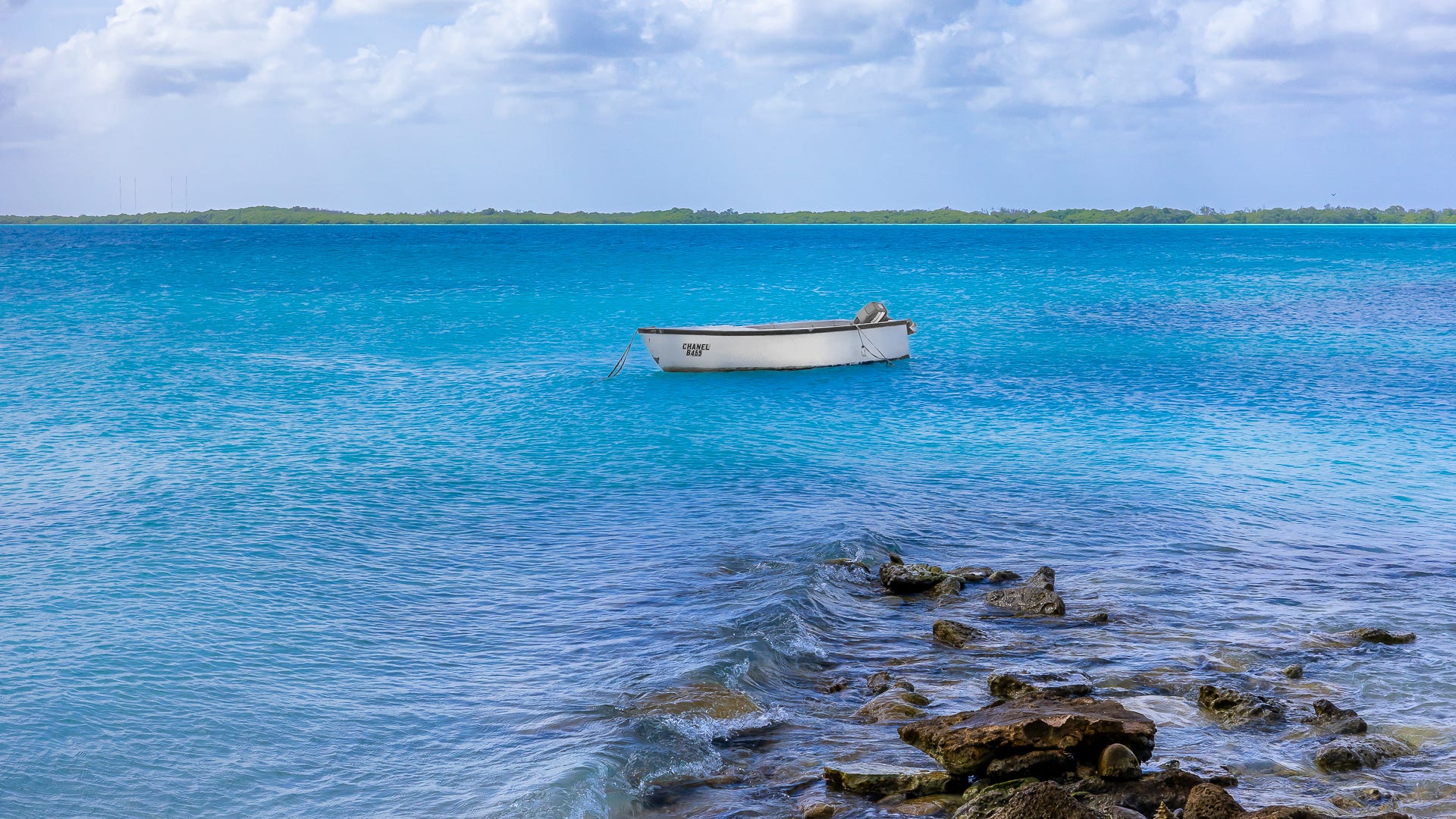
We were moored in waters so clear we could see every coral on the bottom, eighty feet deep, and 100 yards from the shore of Bonaire’s Kralendijk. A couple was having lunch at a picnic table on the boardwalk. I’d seen that peculiar scene the day before: a lunch break and a swim. We watched them closely, wondering if it would happen again. Maybe a date, or a husband and wife on their daily routine. Then their clothes came off, bathing suits on, and they walked down the concrete steps into the water below. They talked, splashed each other, and swam on their backs. In less than ten minutes, they were back at their table. Clothes on, a peck on the cheek, and off they went on their separate ways.
“I love this place!” my wife said while watching the scene unfold on shore. It was one of the many unusual water rituals we had seen since we arrived in Bonaire. By then, we had visited most Caribbean islands. For most, the sea was work: fishermen gutting their catch, ferries shuttling locals across islands, the big ships unloading the cargo of modern life. But the sea was so much more than work on the shores of Kralendijk. Here, the sea was life, and it felt like home.
By late afternoons, the Kralendijk boardwalk would fill with locals. Couples walking their dogs, runners, cyclists, the oldies walking in groups, and the random singles heading home after work. And inevitably, at some point, everyone would end up in the water, dogs and all. “I think they are just chilling there,” I said, pointing at the circles of people forming on the sea. With the water chest-deep, old friends talked about their day and their kids’ upcoming soccer games. And then slowly, we watched them return to land, smiling and refreshed, as if the sea had rinsed their stress away.
Here, the water was an extension of their daily lives. And for the first time since we’d moved into our boat, my wife said, “Let’s move to Bonaire.” We had found our kind. It was an island of cruisers who just happened to live on land.
Thank you for reading. I’d love to hear your thoughts in the comments section below. If you enjoy this story, click “like” to help more readers discover it.
This micro story is part of Harbour Stories, a collection of Non-fiction accounts of the places and people I encounter at ports
About Me
I’m Nestor Lopez-Duran, writing under the pen name N.L. Duran. I am a former psychology professor now sailing around the world with my wife on our sailboat named Blue Buddha. My debut novel, Fifteen Years to Hiva Oa, is available in paperback or Ebook on Amazon and Kobo. The stories published in Currents & Wind are inspired by the people, places, creatures, and events I encounter at sea.