

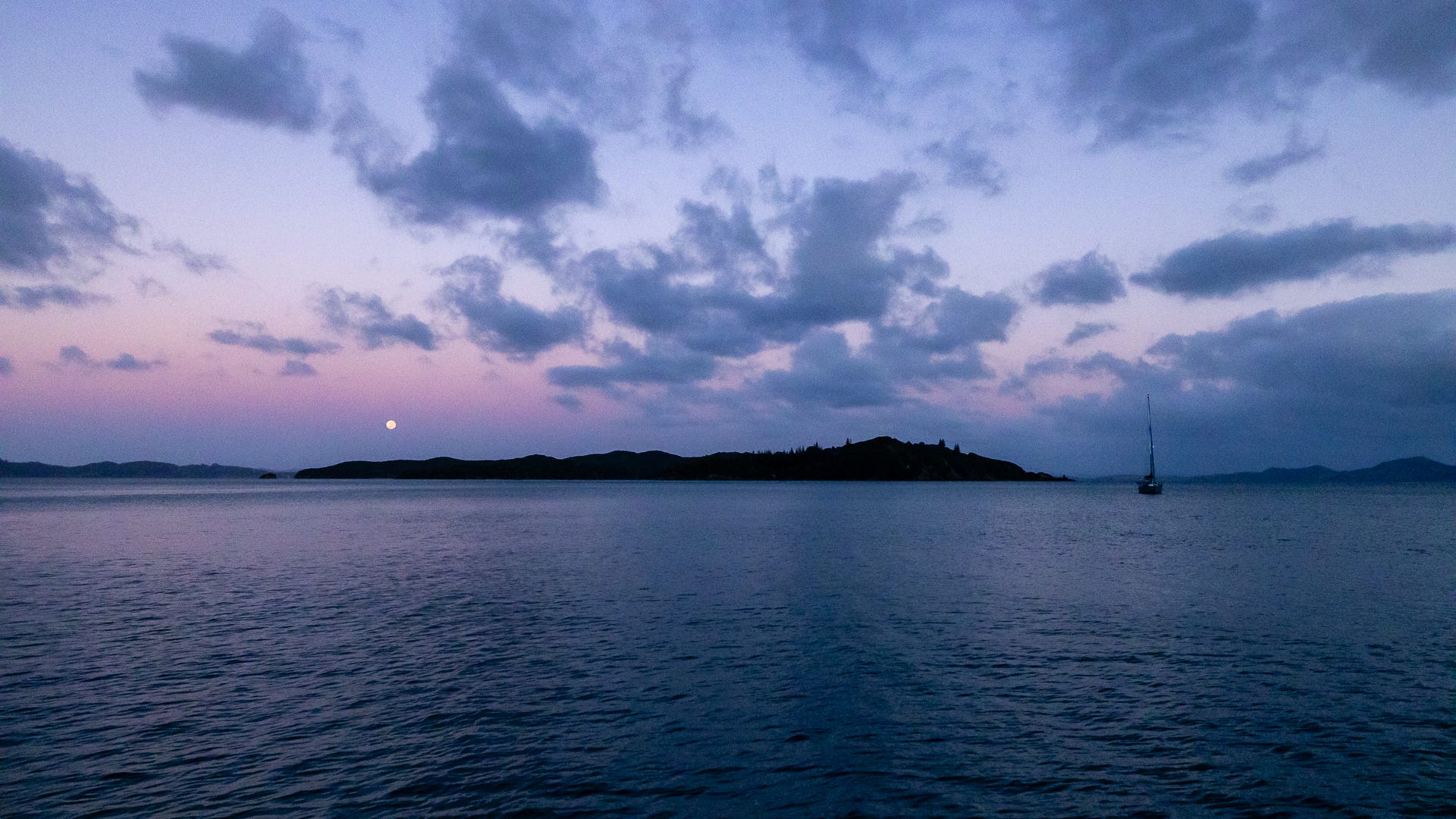
After six weeks and two days of waiting, dozens of boats got ready to set sail north. A weather window had finally arrived.
But not all were so sure.
“That’s not a window. It’s barely a porthole!” a guy at the marina posted in all caps, although he had no intention of ever leaving land.
“Don’t go,” the weather router said, like he did the last time, and the time before, so they all ignored him because what would he know.
The captain heard the debates with interest and attention. He checked the weather charts and forecasts and, after much contemplation, he loudly declared, “This is as good as it gets. Let’s get ready to go!”
“Yes!” his first mate yelled, because she longed for the sea and was sick of wearing winter hats and socks.
Before long, the captain and first mate stood in line at the customs office above the fiberglass shop. It was sunny and unusually warm, and a dozen sailors smiled in the queue, full of joy because they were finally heading north to the lands of coconuts. But if you look closely enough, you could see behind the smiles a glimmer of apprehension, for they all knew there was no such thing as an easy passage to the islands in the north.
And so the captain and the first mate walked back to their dinghy with their passports stamped. “Are we making a mistake?” the first mate asked as they reached the boat. The captain looked at her with his extra-confident face. “I think we’ll be fine,” he said, which was neither yes nor no.
For the next hour, and with equal measures of excitement and trepidation, they worked to get the boat ready to go. The coffee mugs were stowed, the hatches closed, the VHF turned on, and the anchor raised and lashed tightly with a silver rope, “just in case,” the captain said.
And then they were off, sailing slowly down the channel to the open sea. They sailed past the dozens of boats anchored near Russell and the ferries docked in Paihia, and before they knew it, there was no land that they could see, not even the shade of a mountain top.
The first day came and went without a hitch. The first mate monitored the radar and worked out at the helm. The captain plotted their progress with a sharp pencil on an ancient chart, even though it all felt safe. The waves rocked the boat, gently to one side and then the other, just enough to put the off-shift crew to sleep so they could dream of sunny beaches and colorful fish.
So magical was the second day, and then the third.
But the fourth day came, and the winds picked up. And then, on the fifth, the waves rose above the cabin top. At first, they managed. They reefed the sails and wore the fancy jackets with the yellow hoods, because that’s what real sailors do when the ocean gets rough.
And on the sixth, it wasn’t funny anymore.
The rest of this story is available only to subscribers to Currents & Wind—my Author Newsletter and literary project where I share flash fiction, short stories, and reflections drawn from my experiences as I sail around the world with my wife. You can subscribe for free by following the link above.
By subscribing, you will get access to:
All past stories.
A monthly short story delivered directly to your email. These stories will always be available to my subscribers at www.currentsandwind.com
A monthly Author Newsletter email featuring updates on my books and works in progress, early access to new book releases, micro book reviews and recommendations, and personal updates on our travels.
Loved this line: “But the boat just kept on sailing north, unaware of the drama transpiring on the deck above.”
Precise minimal and accurate, I saw waves crashing as I read, wonderful to be among the coconut islands and the success of the book ! Congratulations !